Is the CCTV really installed free of charge?
Yes. The cameras, the mounting, the power and the commissioning are supplied and installed at no cost, and you pay for the monitoring. It works that way because the equipment stays ours, so at the end of the job we take it back and refurbish it for the next site rather than leaving you with hardware you have no use for. There is no installation invoice at the start and no removal invoice at the end.
What does the monitoring actually cover?
A staffed control room watching the alerts your cameras generate, 24 hours a day, seven days a week. Every verified alert gets an operator on it: they look at the live feed, decide what they are looking at, and act. That means a live audio warning through the site speaker, a call to your keyholder, a mobile response unit if one is warranted, and the police where there is a crime in progress. You also get a report of what happened rather than finding out at eight the next morning.
Do you need power and internet on site?
Not necessarily. Where there is mains power we use it. Where there is not, a solar tower with battery and UPS backup runs the same cameras independently, and the connection back to the control room is over a mobile network rather than site broadband. Plenty of the sites we cover are a bare plot with no supply of any kind at the point we install.
How quickly does an alert get looked at?
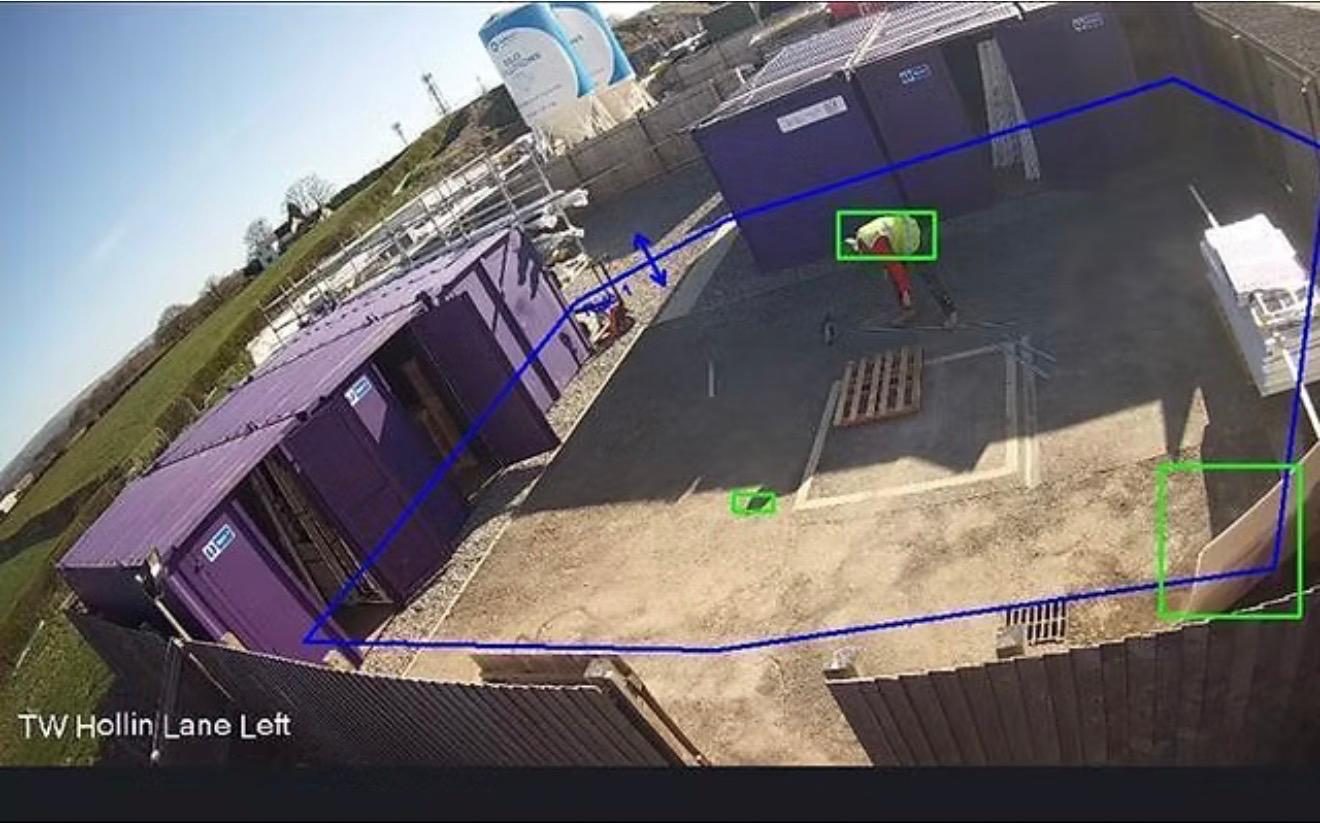
Seconds, because the analytics do the filtering. The reason conventional motion detection fails on a construction site is that it produces hundreds of alerts a night, and a human being cannot keep up with that, so the system gets ignored. Cameras that only fire on a person or a vehicle crossing a defined line produce a handful of alerts a night, which means every one of them gets proper attention.
Can we look at the cameras ourselves?
Yes. Site managers normally want a view of the compound on a phone during the working day, and that is straightforward to set up. The monitoring runs alongside it: the control room handles the out of hours side and the alerts, and you can look in whenever you like without having to ring anybody.
What happens when the job finishes?
We come and take the system down and it moves to your next site or back to the store. The contract is month to month, so when the programme changes, the cover changes with it. There is no fixed term to run out and nothing left bolted to a hoarding that somebody has to deal with after handover.
Is it true you do a free time lapse of the build?
Yes. On new sites and starting projects the cameras are up before anything comes out of the ground, so alongside the security work we put a time lapse together for you free of charge. Sites use them for progress reporting, for marketing and for the simple satisfaction of watching the building go up in ninety seconds. Ask for it when the system is being commissioned and it runs in the background from day one.